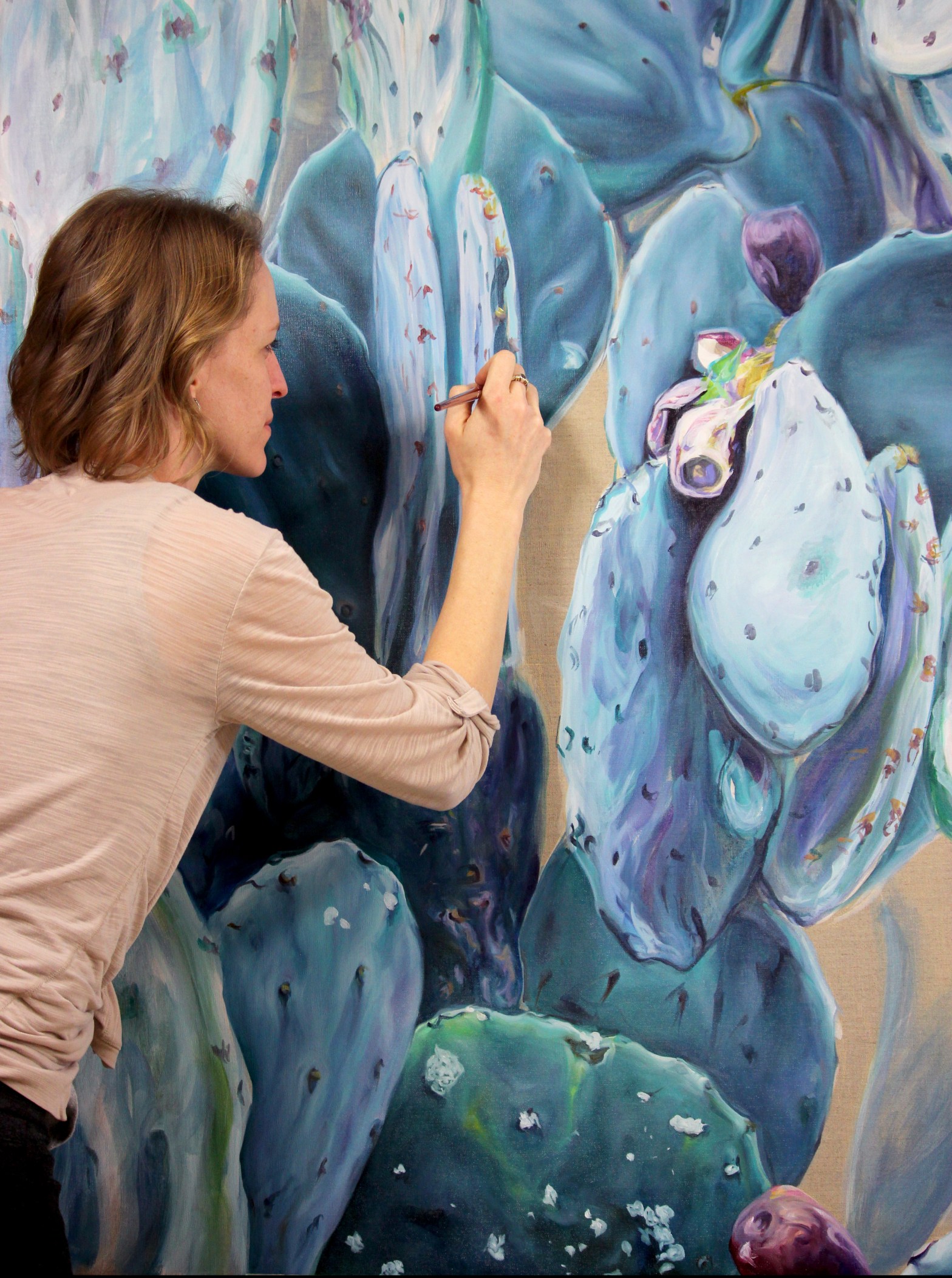
After taking some time to experiment with different materials, this week I’m back to painting with oils. There’s something romantic about oil paint with its buttery texture, the translucency of thin layers, the richness of color, and the freedom to blend and layer without needing to rush before the paint dries. Using graphite, watercolor, pastel, or acrylic always feels a bit like a battle, but here, I am completely at home and always happy to return.
I’m working on a cactus from my Grandparents’ farm. Paths cut into the wild, back part of the property give access to large clusters of brush. Seasonal patterns reveal themselves as I visit the same, uncultivated land over the course of a year. I watched this Nopal go from flowers to fruit and observed a neighboorly vine suddenly bloom, covering the cactus in a blanket of white. I saw those flowers give way to the tell-tale forms of the milkweed pod, first green, then dried and opening to reveal the soft tufts of seeds within.
I often paint cactus. I feel the history and identity of my home in the colors and shapes of this humble plant. Old Nopals are compelling sculptures that hold life and decay as the bottom pads shimmer with deterioration in pinks and purples, providing the foundation for the fresh new growth above. Their spines demand respect. The sumptuous undulations catch the light in purples and greens, and the stark white contrasting blotches hide the cochineal insect, an ancient and potent source of red dye coveted by Indigenous cultures and conquering Europeans.
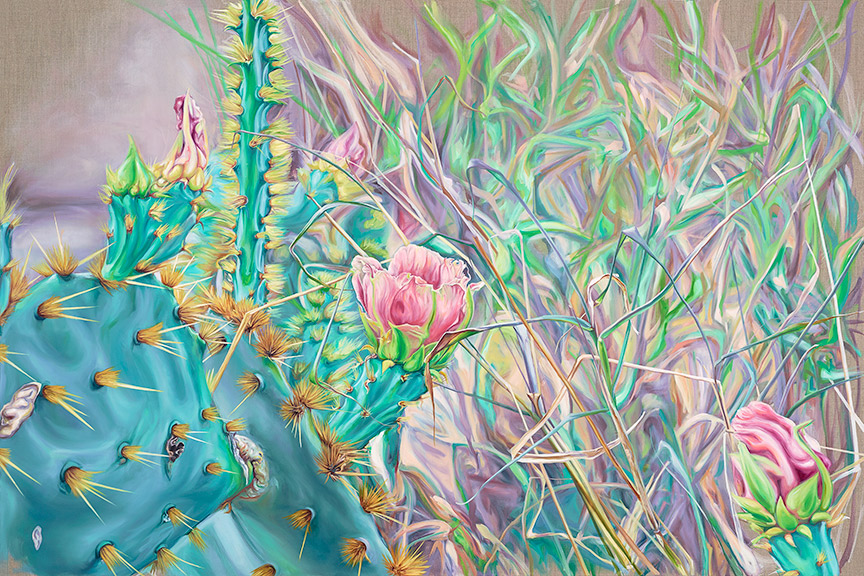
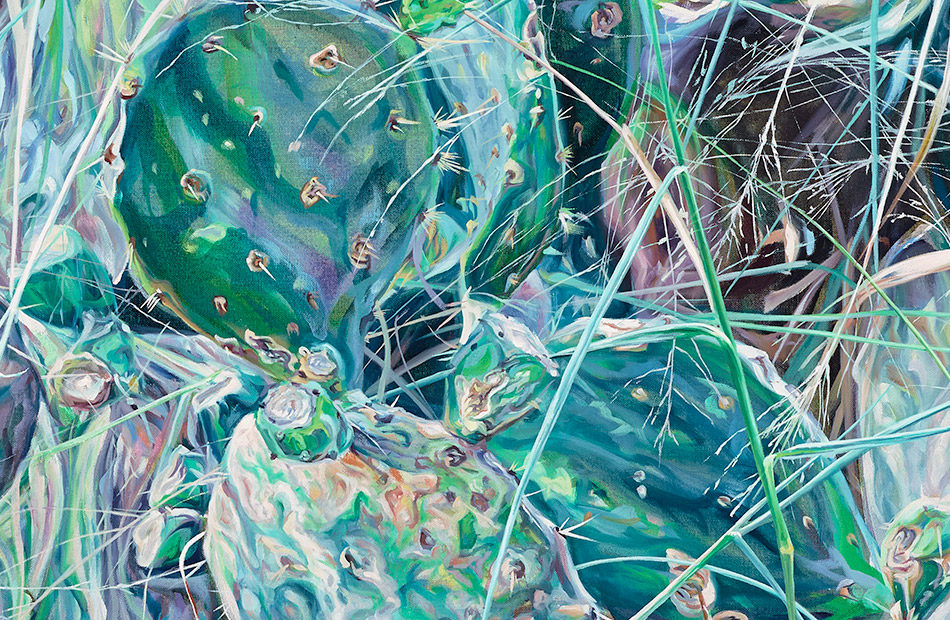
A staple of South Texas, Nopal provides food and protection for local people and animals alike. According to Healthline, eating Nopal has many benefits including regulating blood sugar levels, reducing cholesterol, and even curing hangovers! Try some of the recipes below to bring this incredible plant into your home and kitchen.
 Artist Jessica Monroe
Saludos Jessica fantasticas tus pinturas..siempre¡¡¡
LikeLike
Gracias Joaquín!! 😁
LikeLike